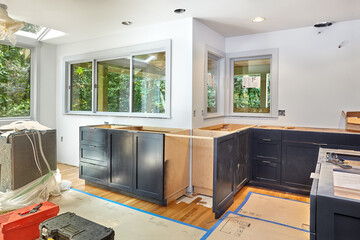
Cabinet Refinishing Modesto is a detailed and methodical process designed to restore the appearance of existing cabinets without removing or replacing them. It is a popular option for homeowners who want to update their kitchen or bathroom while preserving the original cabinet structure.
Understanding the cabinet refinishing process helps set realistic expectations, highlights the value of professional workmanship, and explains why refinishing can deliver long lasting, high quality results when done correctly.
Understanding What Cabinet Refinishing Really Means
Cabinet refinishing focuses on renewing the existing cabinet surfaces rather than changing the cabinet layout or structure. The cabinet boxes, doors, and drawer fronts remain in place, but their exterior finish is removed, repaired, and replaced with a new coating. This process is ideal for cabinets that are structurally sound but show signs of wear such as fading, scratches, stains, or outdated color.
Unlike refacing, which replaces doors and veneers, or painting that may only involve surface level changes, refinishing is a restoration focused approach. It improves appearance while maintaining the integrity of the original materials, which are often solid wood and higher quality than many modern replacements.
Step One: Initial Evaluation and Project Planning
The cabinet refinishing process begins with an evaluation of the existing cabinets. This step determines whether the cabinets are suitable candidates for refinishing. Professionals inspect the cabinet boxes, doors, drawer fronts, and frames for structural integrity, water damage, warping, or excessive wear.
During this stage, homeowners discuss goals such as color changes, stain versus paint, sheen level, and overall style. The condition of the cabinets influences what finishes are possible and how much preparation will be required. Planning also includes reviewing the project timeline, drying periods, and how the kitchen or bathroom will be used during refinishing.
Clear planning at the start prevents delays and ensures the final result aligns with expectations.
Step Two: Protecting the Work Area
Before any refinishing work begins, the surrounding area must be protected. Cabinet refinishing is a detail oriented process that involves sanding, cleaning, and applying finishes, all of which require controlled conditions.
Professionals protect countertops, floors, appliances, and walls with coverings. Ventilation systems may be set up to control dust and fumes. Proper preparation of the workspace ensures safety, cleanliness, and a higher quality finish.
This step also includes removing cabinet doors, drawer fronts, and hardware. Each piece is carefully labeled to ensure correct reinstallation later. Removing these components allows for more even refinishing and reduces the risk of overspray or uneven application.
Step Three: Deep Cleaning and Degreasing
One of the most critical and often underestimated steps in cabinet refinishing is deep cleaning. Over time, cabinets accumulate grease, oils, dirt, and residue from cooking and daily use. These contaminants prevent finishes from adhering properly if not removed.
Professionals use specialized cleaners and degreasers to break down buildup on all surfaces, including edges and corners. This step is especially important in kitchens, where airborne grease can coat cabinets invisibly.
Skipping or rushing cleaning leads to peeling, bubbling, or uneven finishes later. Thorough cleaning ensures the refinishing process starts with a clean, stable surface.
Step Four: Sanding and Surface Preparation
Sanding is the foundation of the cabinet refinishing process. Its purpose is to remove the existing finish, smooth imperfections, and prepare the surface for repairs and new coatings. Sanding may be done by hand or with professional tools, depending on cabinet design and condition.
During sanding, scratches, dents, and worn areas become more visible. This step creates an even surface and allows fillers and primers to bond effectively. Careful sanding is especially important on detailed cabinet profiles to preserve their shape.
Proper surface preparation at this stage directly affects the durability and appearance of the final finish. Inconsistent sanding often results in visible flaws once the new finish is applied.
Step Five: Repairing Imperfections and Damage
After sanding, cabinet surfaces are inspected for damage that needs repair. Minor dents, chips, cracks, or gaps are filled using wood fillers or bonding materials. These repairs restore smoothness and uniformity to the cabinet surfaces.
Loose joints, misaligned doors, or worn edges may also be addressed during this stage. Taking the time to correct these issues ensures that cabinets not only look better but function properly after refinishing.
Repairs are sanded again once dry to blend seamlessly with the surrounding surface. This attention to detail is what separates professional refinishing from temporary cosmetic fixes.
Step Six: Final Surface Preparation and Dust Removal
Before applying any finish, all sanding dust and debris must be removed. Dust particles left on the surface can cause bumps, rough texture, or imperfections in the final coating.
Professionals use vacuum systems, tack cloths, and cleaning solutions to ensure surfaces are completely clean. This step may seem minor, but it plays a significant role in achieving a smooth, professional finish.
A clean surface allows primers, stains, or paints to apply evenly and cure properly.
Step Seven: Applying Primer or Base Coat
The next step depends on whether the cabinets are being painted or stained. For painted cabinets, a primer is applied to create a strong bond between the surface and the paint. Primer also helps block stains, prevent bleed through, and ensure even color coverage.
For stained cabinets, a conditioning step may be used to promote uniform absorption of the stain, especially on wood species prone to blotching. The base coat sets the stage for the final appearance and durability of the cabinets.
Primer or base coats are allowed to dry fully before moving to the next step. Proper drying time is essential to avoid adhesion issues.
Step Eight: Applying the New Finish
The application of the new finish is the most visually transformative part of the cabinet refinishing process. Paint, stain, or clear coat is applied using professional techniques designed to produce smooth, even coverage.
Multiple thin coats are typically applied rather than one thick coat. This approach reduces drips, brush marks, and uneven texture. Each coat is allowed to dry and may be lightly sanded between applications to maintain smoothness.
Color accuracy, consistency, and edge detail are carefully managed. This step determines the final look of the cabinets and requires patience and skill.
Step Nine: Drying and Curing the Finish
Drying and curing are two different stages that are both essential to the refinishing process. Drying refers to the time it takes for the finish to no longer be wet to the touch. Curing is the longer process during which the finish hardens and reaches full durability.
While cabinets may appear finished after drying, they are still vulnerable to damage during curing. Professionals allow adequate time before handling and reinstallation to prevent fingerprints, dents, or sticking.
Understanding curing time helps homeowners protect their newly refinished cabinets and ensures long lasting results.
Step Ten: Reinstalling Doors, Drawers, and Hardware
Once the finish has dried sufficiently, cabinet doors and drawer fronts are carefully reinstalled. Hardware such as hinges, handles, and knobs are either reattached or replaced if the homeowner has chosen updates.
Doors are aligned, hinges adjusted, and drawers tested to ensure smooth operation. This step restores full functionality and completes the transformation.
Attention to alignment and spacing ensures the cabinets look balanced and operate correctly.
Step Eleven: Final Inspection and Touch Ups
The cabinet refinishing process concludes with a detailed inspection. Professionals review all surfaces for consistency, smoothness, and color accuracy. Any minor touch ups are completed to ensure a flawless result.
The work area is cleaned, protective coverings are removed, and the space is returned to normal use. Homeowners are often given care instructions to protect the finish during the remaining curing period.
This final step ensures quality control and customer satisfaction.
Benefits of a Proper Cabinet Refinishing Process
A well executed cabinet refinishing process delivers multiple benefits. It restores beauty, extends cabinet lifespan, and avoids the cost and disruption of replacement. Refinishing also preserves high quality materials that may no longer be available in modern cabinetry.
When done professionally, refinished cabinets can look and perform like new for many years. The process is environmentally responsible, cost effective, and customizable to suit modern design preferences.
Final Thoughts on the Cabinet Refinishing Process
The cabinet refinishing process is a comprehensive restoration method that requires careful preparation, skilled application, and patience. Each step, from initial evaluation to final inspection, plays a crucial role in the success of the project.
Understanding this process helps homeowners appreciate the value of professional refinishing and the craftsmanship involved. When done correctly, cabinet refinishing transforms worn or outdated cabinets into refreshed, durable, and attractive features that enhance the entire space.
Visit our Professional Services Blogs
Portland Metro Plumbers, Provantage Handyman, Santa Ana Flooring, Plumbing Heating Cooling New Jersey, Riverside Stump Grinding, Painter In Hanover, My Restoration Directory, Miami Dade Restoration Services, Update Construction, Campanelli Construction, Cruz Construction And Restoration , Airconditioning Round Rock, Air Dynamics Airconditioning And Heating, Gands Airconditioning And Heating, Windward Building Company LLC, Airconditioning Repairs Bocaraton, Laguna Airconditioning, Roofing 719, 3 Phase Construction NJ, Broadway Building Contractors, UIS Concrete And Demo, Austin Plumbers Near Me, Richmond Gutter Cleaning Company, Weather Defense Roofing Weather Proof Roofing, Ray Allen Plumbing, Raleigh Pressure Washing Painting , Fairfield County Septic, Carlson Craft Cabinets, Helping Hand Home Improvement, Delco Home Inspector, Window Cleaning Stafford